Two days ago now we were in Puenta Arenas. I had been looking forward to this experience. I actually thought that, compared to Ushuaia, Puenta Arenas might have more going on and be a better place for expats. I was wrong on that, but more on that tomorrow.
Puenta Arenas is a nice port city typical of what you would expect at the intersection between the pampas and the fjords and mountains of the South America cone. It’s likely the best place to stock up anything you may need for the nine day stretch between Ushuaia and Puerto Madryn – the next time you’re in port with easy access to a supermarket. Puerto Montt is also cheaper than Ushuaia, but more on that later.
We booked an excursion called Puenta Arenas sights and Patagonian Estancia. This took in a city tour that included five stops in town, some scenic wildlife viewing, and then a visit to a Patagonian Estancia, or rather a sheep station or ranch.
My ratings on the excursions we’ve taken since we’ve been down here:
Chef in Puerto Montt – two thumbs up from both of us.
Fjord cruise and hot springs experience – One thumb up from one of us, one and a half from the other. We’d give it more but unless you were the one booking the excursion you never saw the notes for logistics.
Punta Arenas Sights & Patagonia Estancia excursion – two thumbs up from both, although I’m wavering on mine. My second thumb up would be more firm if it were a 20 person bus instead of 40. 40 HAL cruisers – try to sit towards the front of the bus next time.
They picked us up on time at the port on time and fairly early in the day as it was nine hours as scheduled. One thing I wish we could do more easily is this – get off the ship prior to excursion and meet the bus on the pier after some shopping. We had an errand to run at UniMarc the supermarket we may have wanted to handle in the morning rather than when we were tired. Anyway. I don’t think we can do this unless we return to the ship to queue up in the theater.
After picking us up, the first stop was a viewpoint in town.
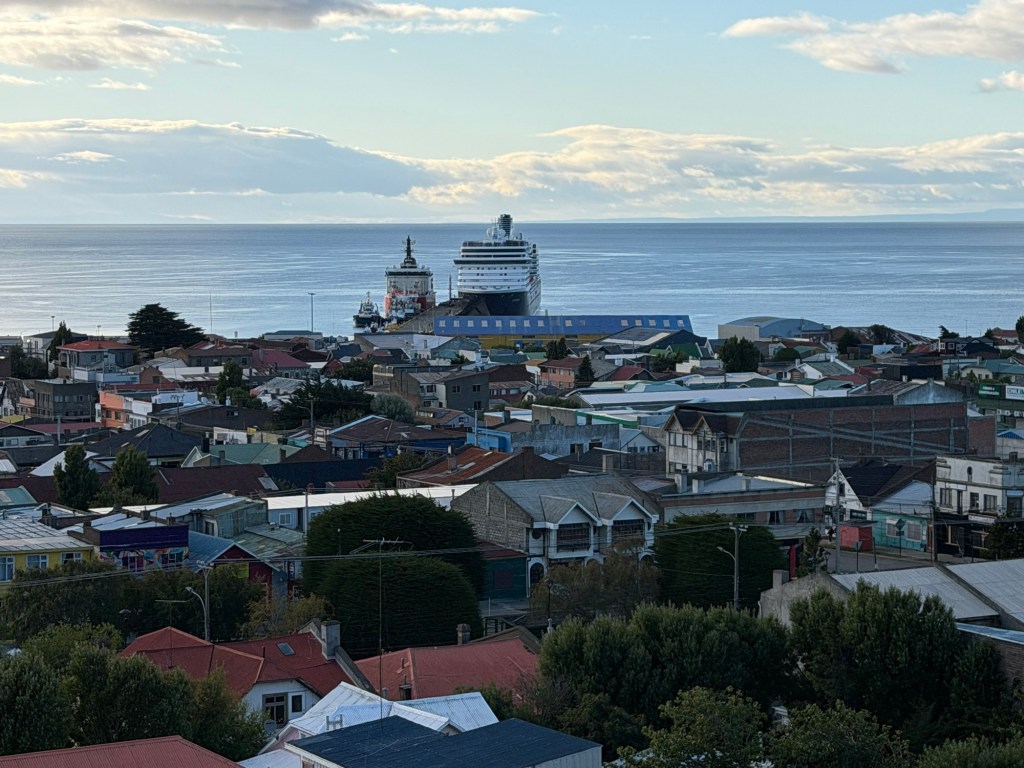
The weather was beautiful at that point in the day – intermittent sunshine. My mother was actually with us for this excursion. Anyway, we all piled out of the bus, and then we all piled back on.
Then, like all South American cities, there was a Plaza Des Armas.
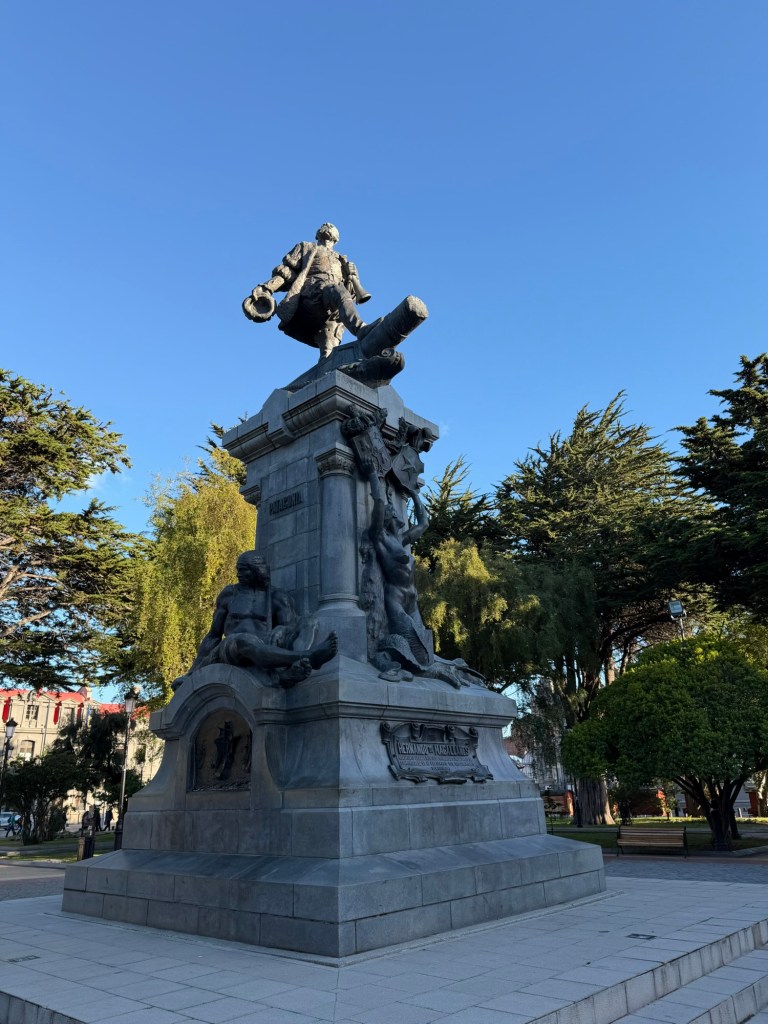
In the plaza there’s a big Magellan statue. It is said that if you rub his foot you will return someday. I had heard this prior; unfortunately I did not rub his shoe. Nonetheless, this would be a great place to return to.
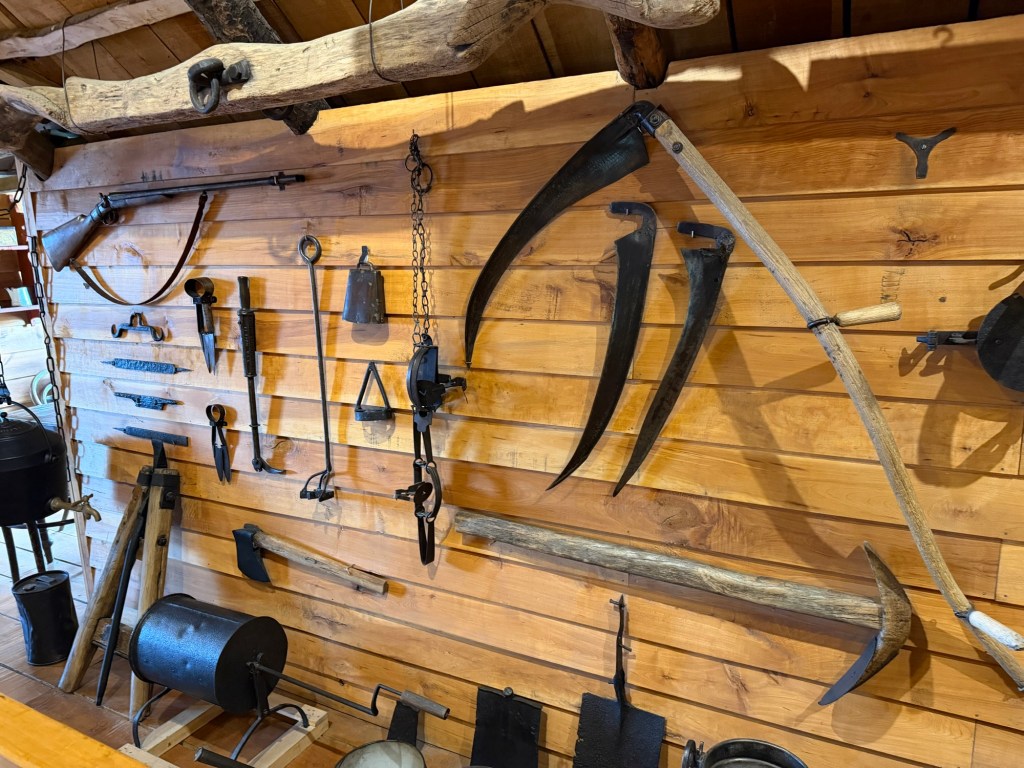
Our third stop was the Museo Maggiorino Borgatello, our first museum of the day and our first of the journey. This was a fascinating history of the region from Magellan times to modern times. It was very thorough but I wish they had spoken a bit more about the culture of the indigenous people before diving into “and the missionaries converted them.” We learned a lot about the settlement of the region as well as its resources in modern times.
Speaking of missionaries, then we went to the cemetery.
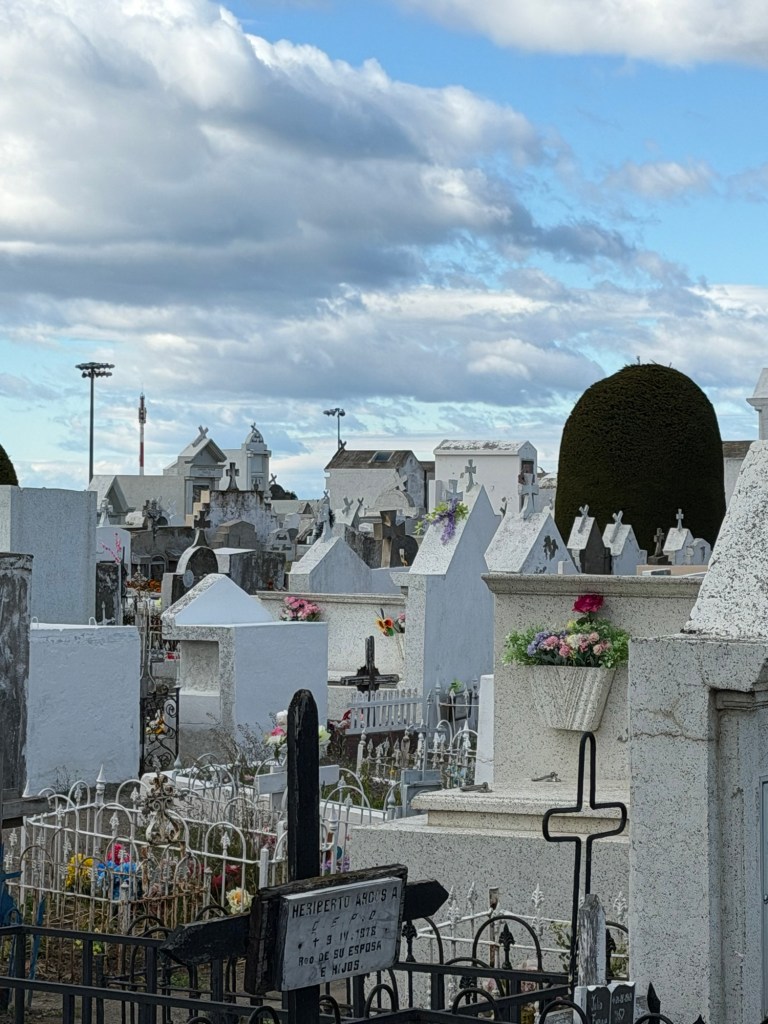
Cemetery of Punta Arenas Sara Braun is the public cemetery of the city of Punta Arenas, Chile
The land for the cemetery was donated by pioneer Sara Braun. I won’t write about it here and they didn’t speak of it on the tour, but Sara Braun, like many of her era, is in retrospect rather controversial, as some of her actions inadvertently caused genocide amongst the indigenous population of Patagonia.
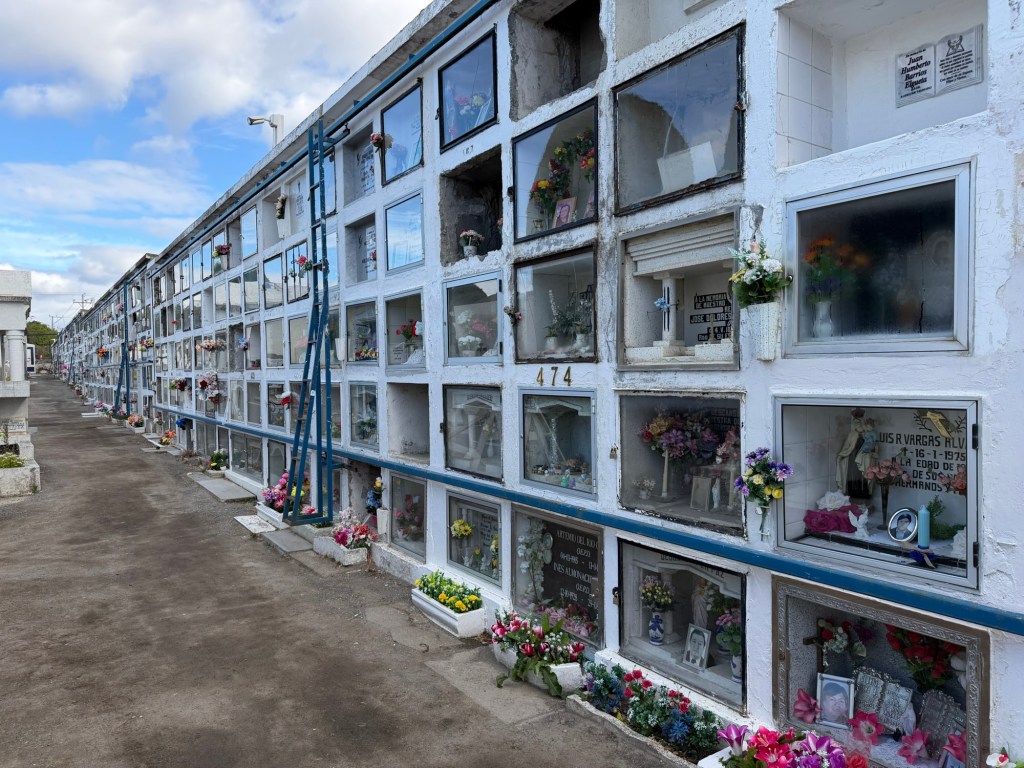
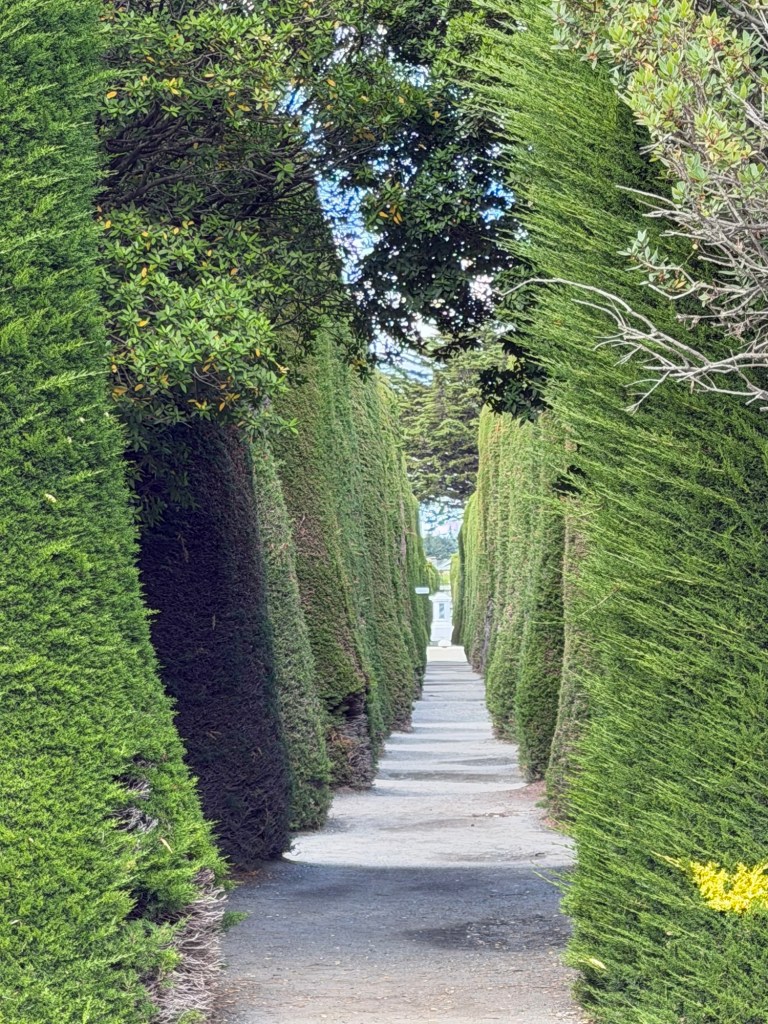
The cemetery has walking avenues of sculpted cedar trees which are not native to this part of South America; their cultivation is designed to reduce the wind flow through the cemetery as it is literally almost always windy here.
After visiting the cemetery, we piled back on the bus for the short drive to the Patagonian Institute Museum, officially the Museo del Recuerdo (Museum of Remembrance).
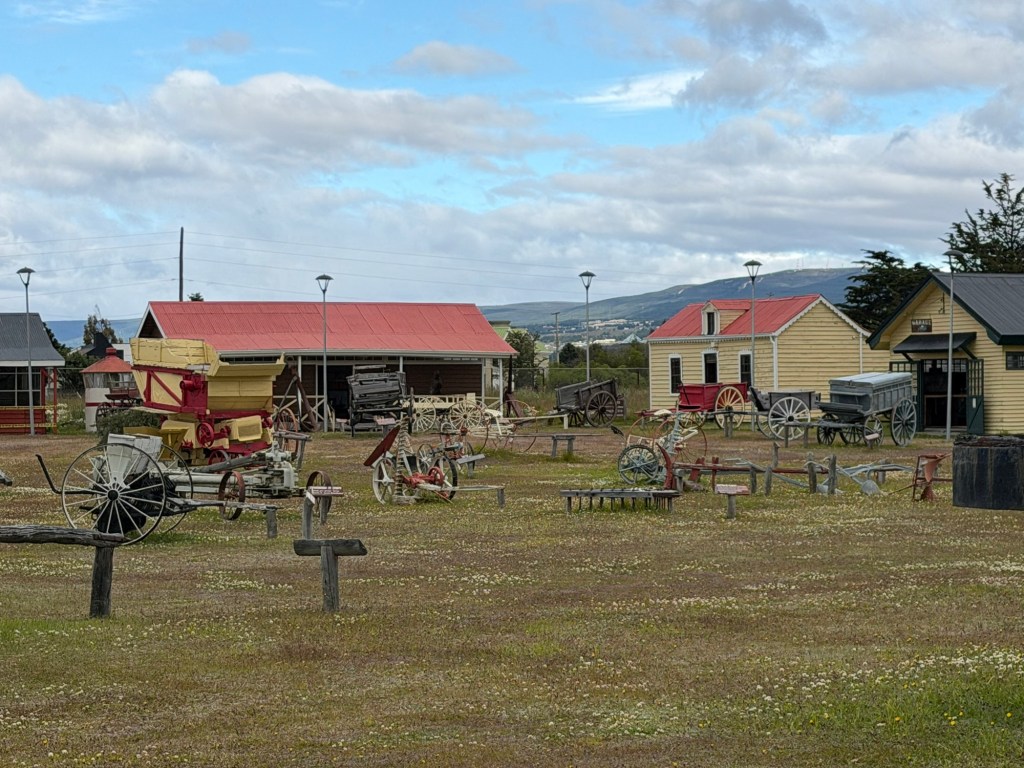
This museum is an open-air heritage museum in Punta Arenas, Chile, showcasing pioneer life with historic buildings, farm machinery, and artifacts from early settlers, part of the University of Magallanes. It features reconstructed pioneer houses, a shearing shed, antique vehicles, tools, and shops like a pharmacy, offering a glimpse into the region’s development from the 1880s to the 1950s. Frankly it seems like a place where people donate their old stuff so they don’t need to find a different home for it.
A few things of value –
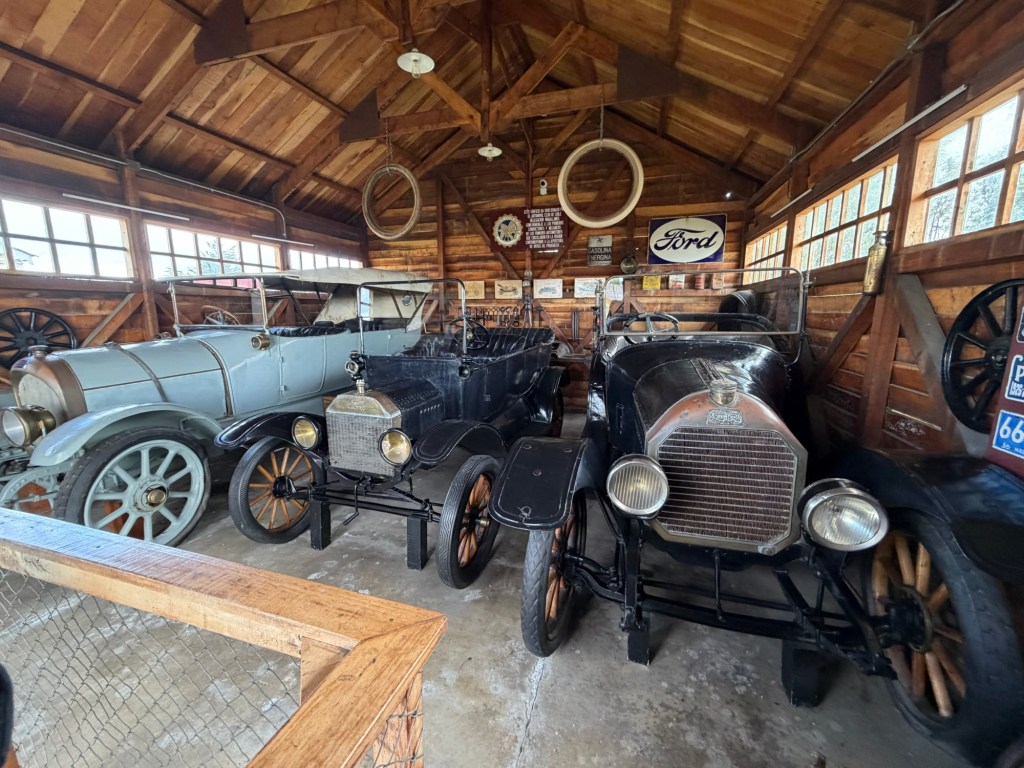
An old Peugeot (can’t say I’ve ever seen one before), a Model T, and a Martini (I know I’ve never seen one of those before!). The Martini, the blue car on the left, was made in Switzerland. There were only a few thousand ever manufactured, so how one got down here, who knows.
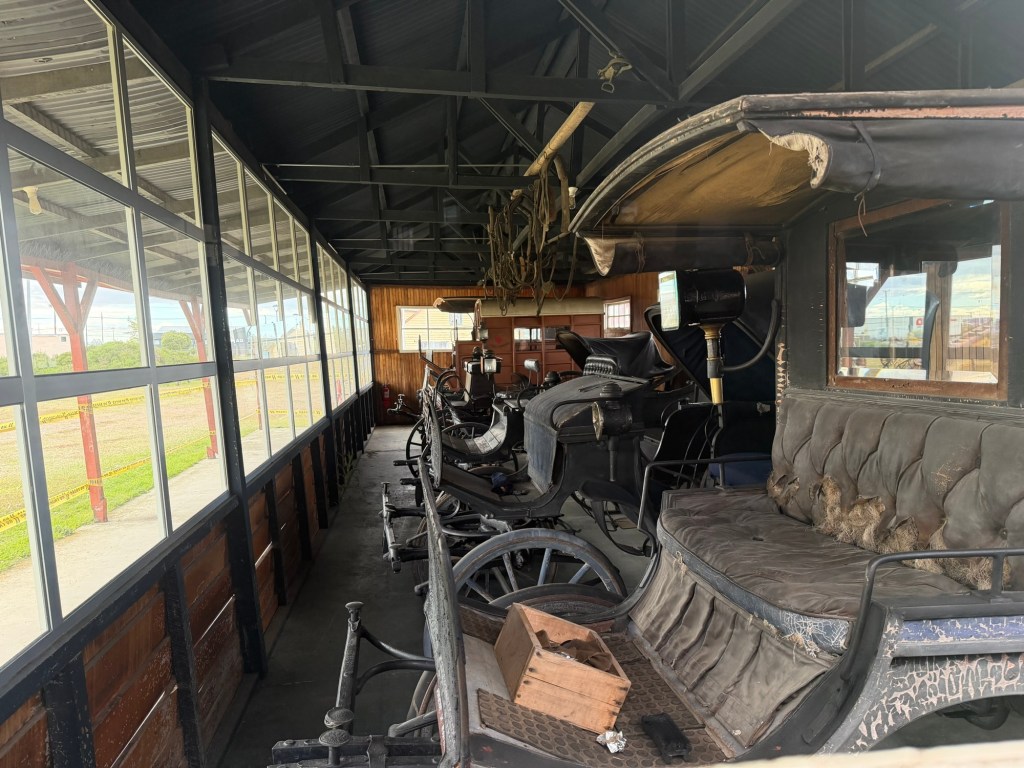
There was a whole barn full of horseless carriages. The porch of it was falling down so they had it roped off so you could not properly view it, but I took a look through one of the windows on the end.
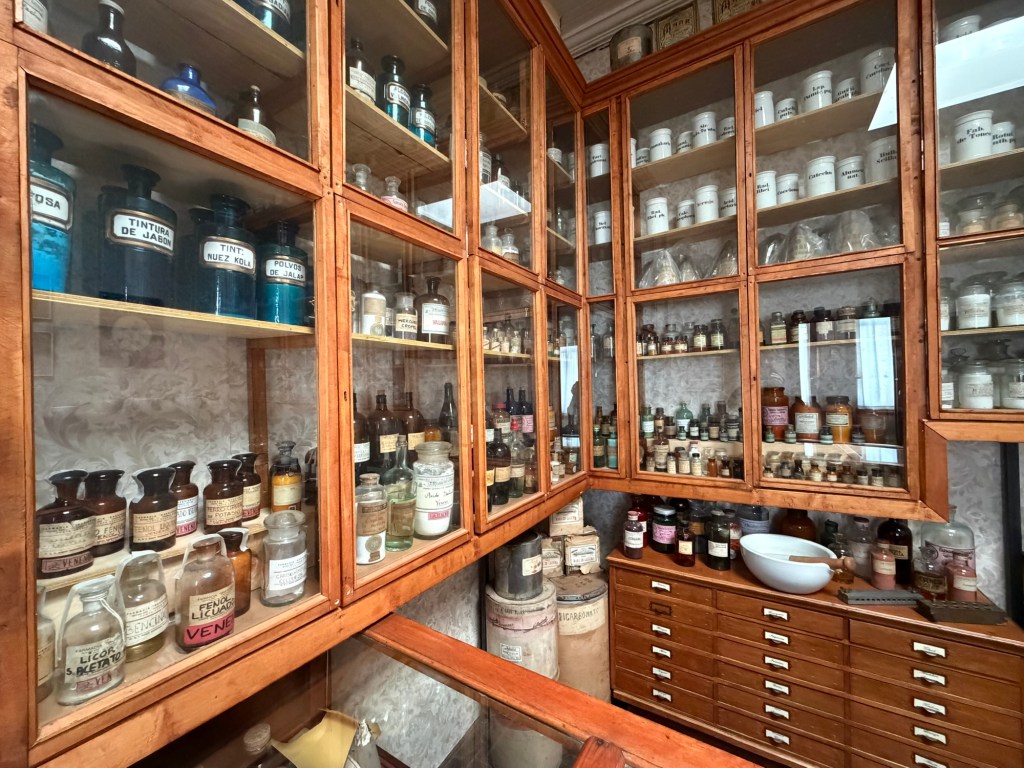
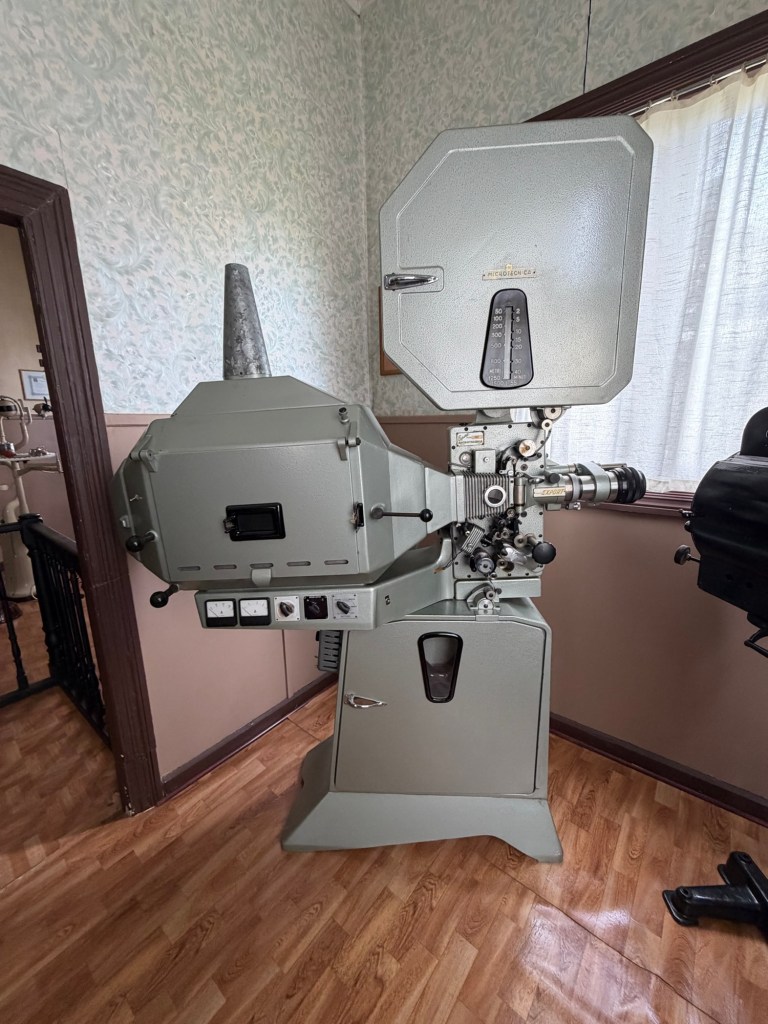
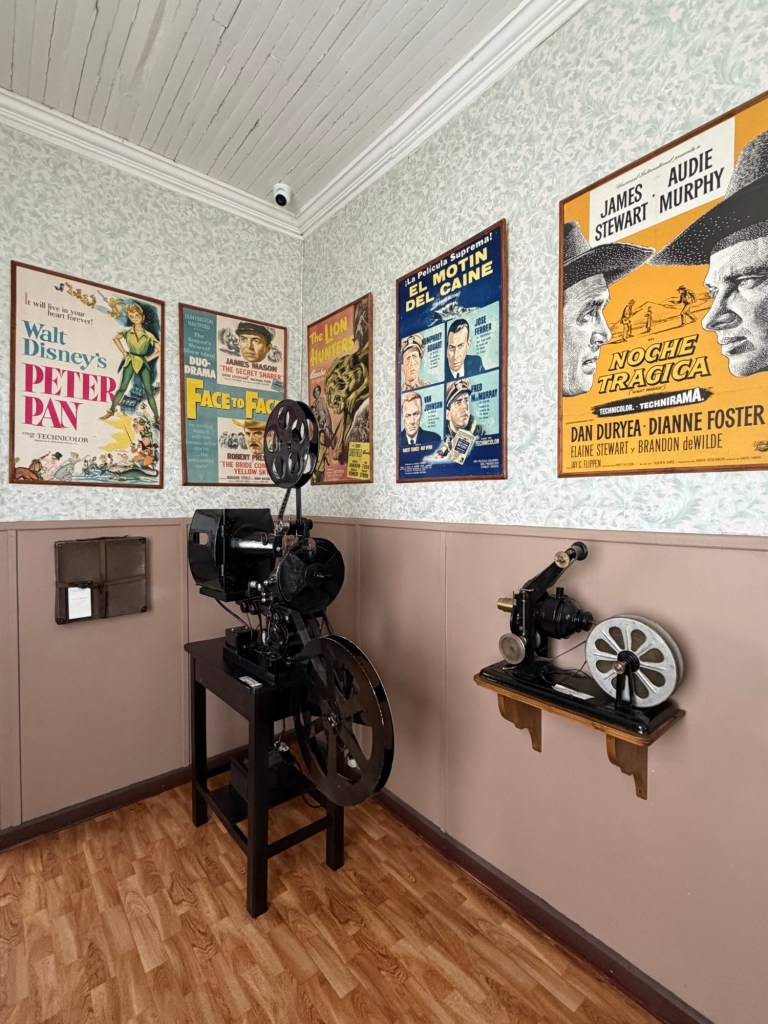
Somebody donated an old time pharmacy setup to the museum. They also (not the same person most likely) donated about three or four cinematic projectors to the museum and a collection of old movie posters.
Eventually we left the museum and started heading north on the main highway out of town – and towards the rest of the continent. This was like a regular expressway, but from time to time they herded you all onto one side or the other and often pavement ended entirely as they were regrading it and adding in drainage. The older pavement appeared as if it has been here forever and a day. And it also doesn’t seem as if they need an expressway.
Anyway, this is where the real fun began. Whenever our driver saw something interesting he pulled over so we could take pictures.
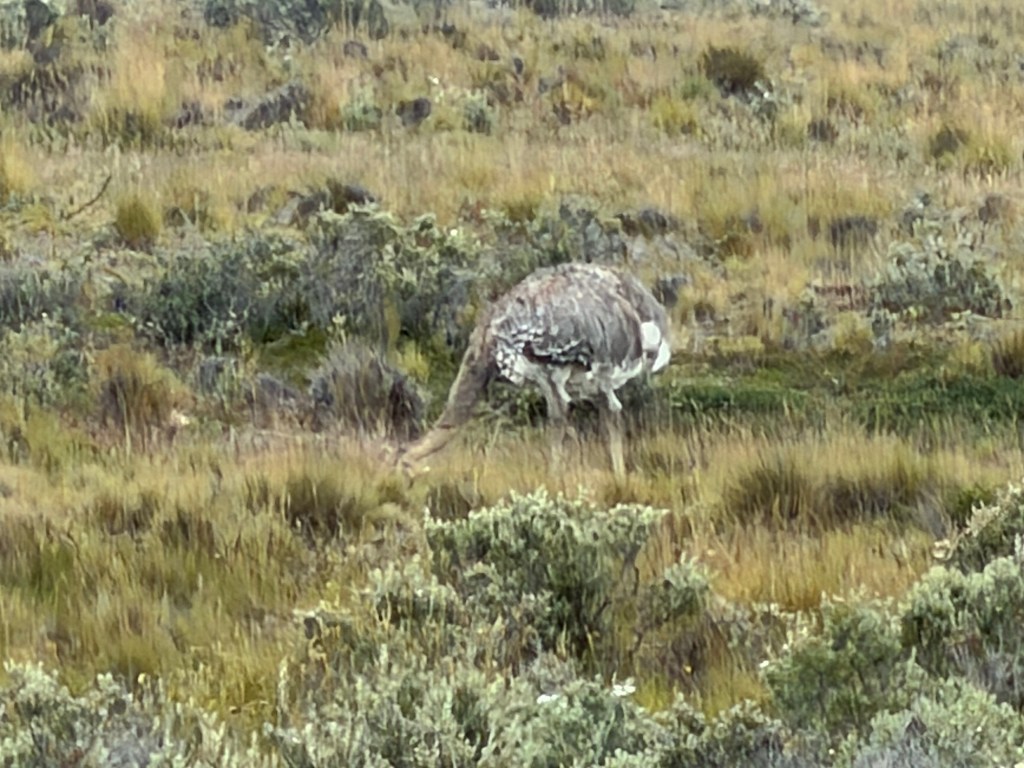
There were rheas everywhere, aka ñandú in the indigenous language.
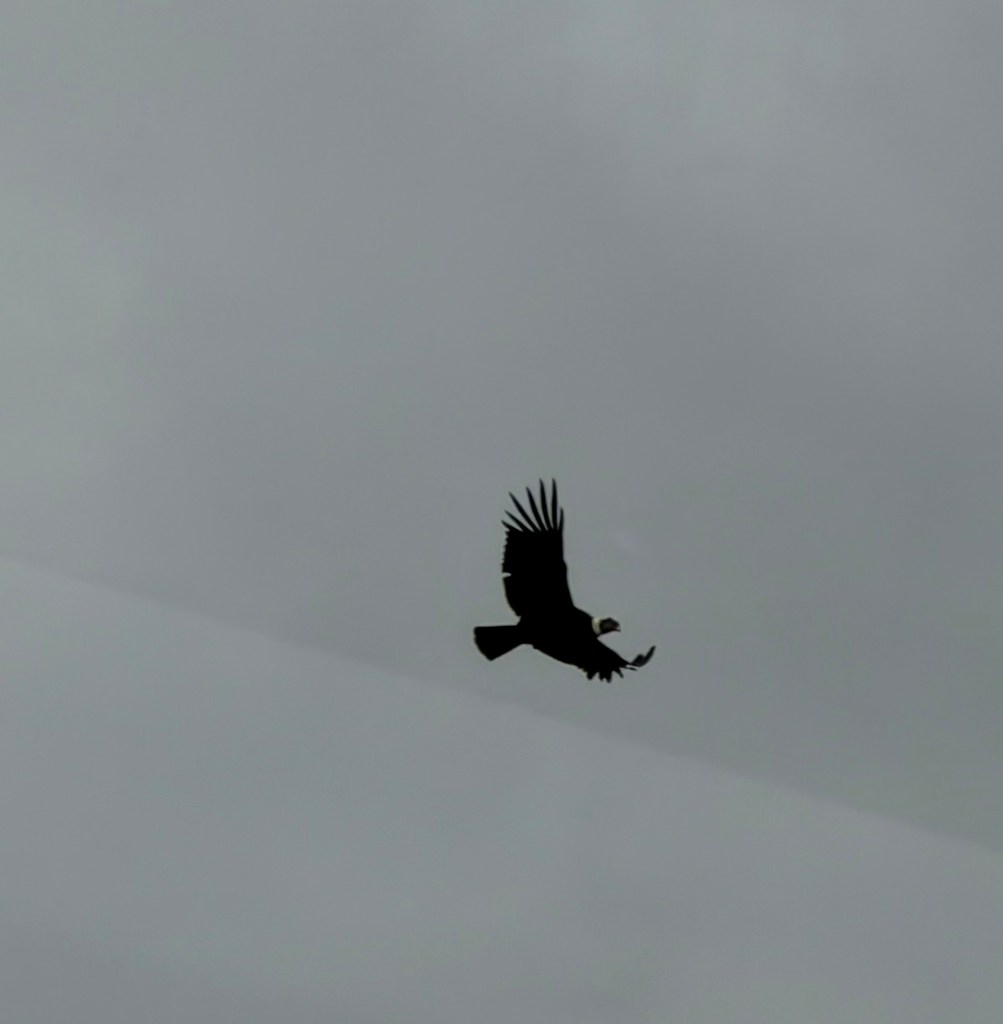
We saw an Andean condor flapping around, purely by luck. There was another excursion that travels to the cliffs simply to see the Andean condor so I would recommend that if you actually want to see multiple condors. I felt that would be a drag so we took this excursion instead (I did not know we were going to see so much wildlife).
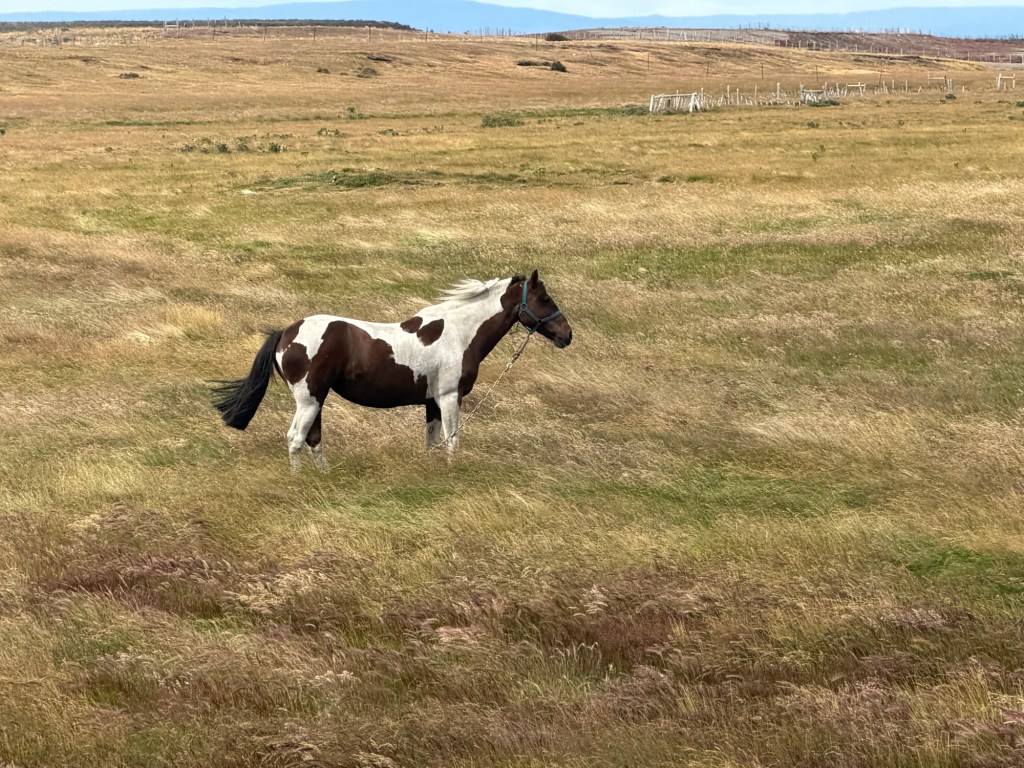
We saw a lot of horses. Interestingly they all were dragging their leads. Fairly tame, I believe the purpose of the horses is for herding sheep, patrolling the ranch lands, and participating in rodeos.
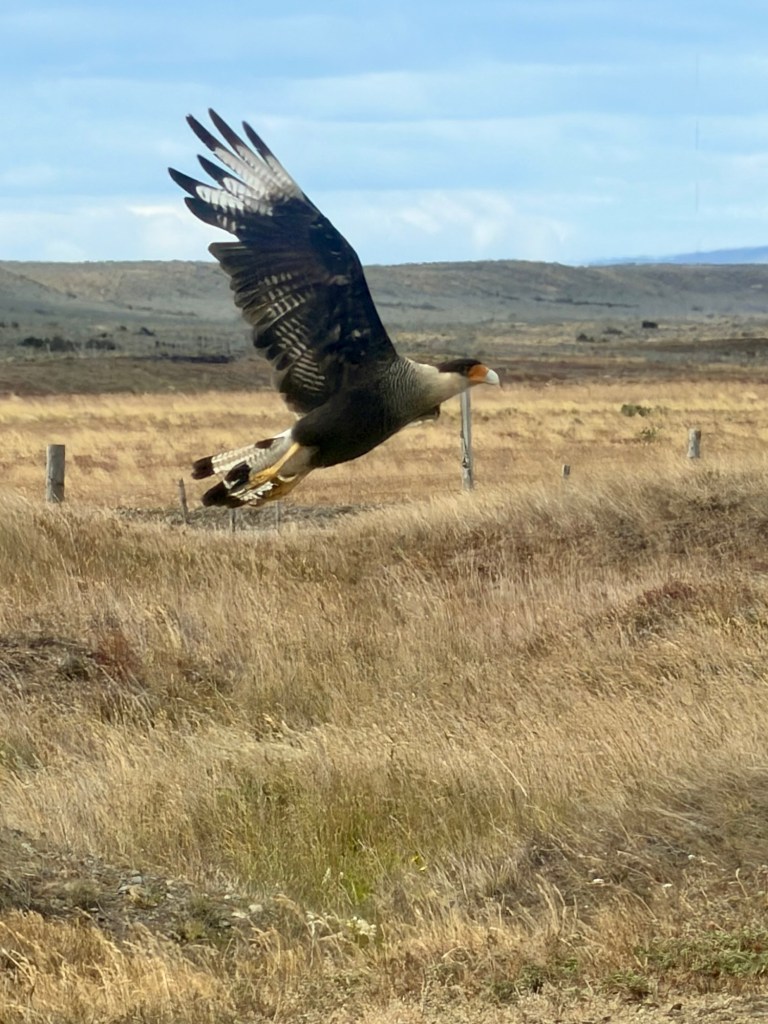
We saw a lot of crested caracara birds. I snapped the photo above from the window of the bus.
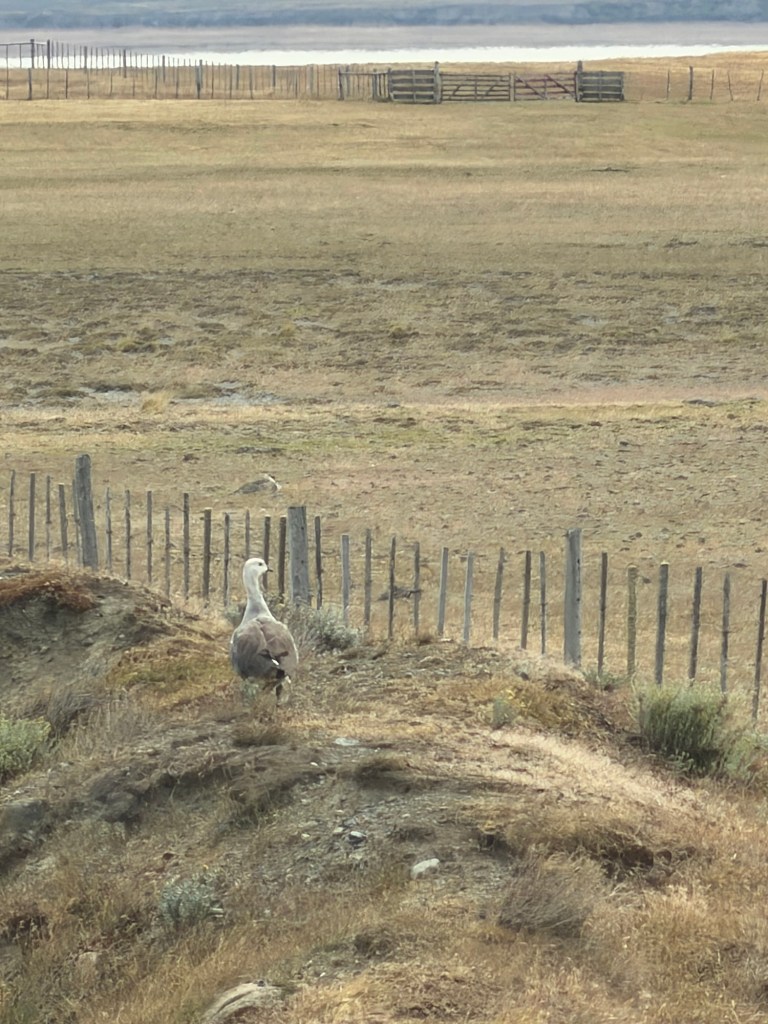
We also saw upland geese, and a whole lot of sheep (not as many as New Zealand, but a lot).
Our destination was Estancia Olga Teresa. Quoting from the ranch’s web site –
Estancia Olga Teresa is situated in the Río Verde (Green River) commune, 78 km northwest of the city of Punta Arenas, in the Region of Magallanes and the Chilean Antarctica.
This Estancia is a typical Chilean Patagonia place where visitors can enjoy the ranching traditions, typical of the Magallanes Region, and have an encounter with nature in a unique and welcoming atmosphere.
In 1922, the Estancia was acquired by Don Fermin Berjoan Roca, pioneer of Frenchorigin, who gave it the name of his two daughters, Olga and Teresa. Currently, the Estancia belongs to his grandson Rodolfo Concha Roca, together with his wife Yvonne Paeile Jordan and their four children, Rodolfo Luis, Lorena, Cristián andRodrigo.
I believe Rodolfo’s mother was present at the ranch and provided us with a greeting. Rodolfo and his wife were there to lead our tour and manage the barbecue operation. And yes, lunch was barbecue.
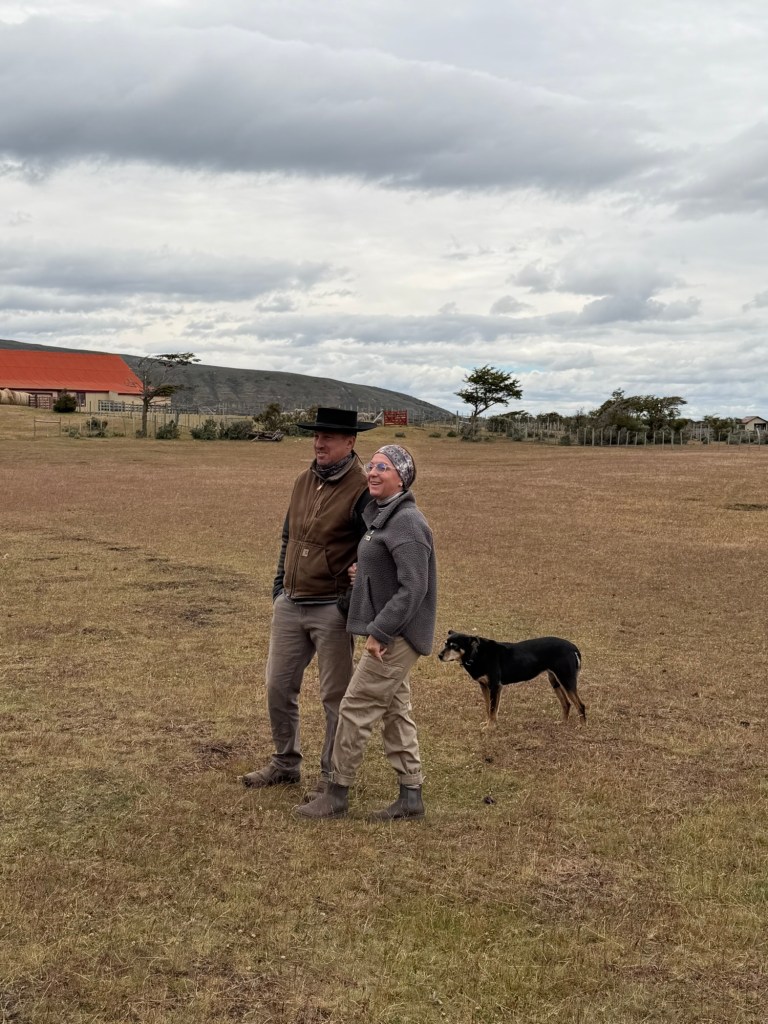
I presume they raised everything we ate on the property although they did say they are there only in the summer. I found at least a few similar ranches around some of which also allow a stay.
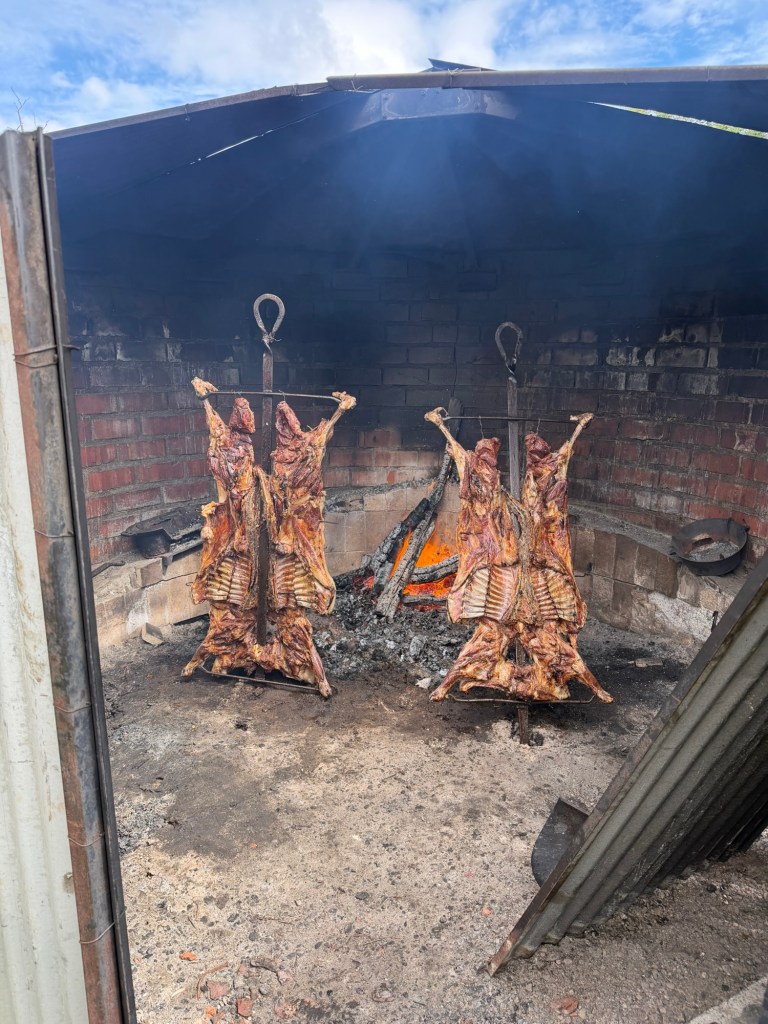
It was sublime and accompanied by several bottles of red wine. We ate outside under shelters designed to keep us dry if it rained (it did not, at least not immediately) around a courtyard designed to keep the wind away. And it was a beautiful summer day – temperatures in the mid-fifties Fahrenheit, or around 12 Celsius. It doesn’t get any better in this part of the world.
It turns out this was the warmest, nicest weather we would see for a while. Also, about ninety minutes later it started raining again.
After a hearty lunch, they herded us out to the pastures for a sheepdog demonstration.
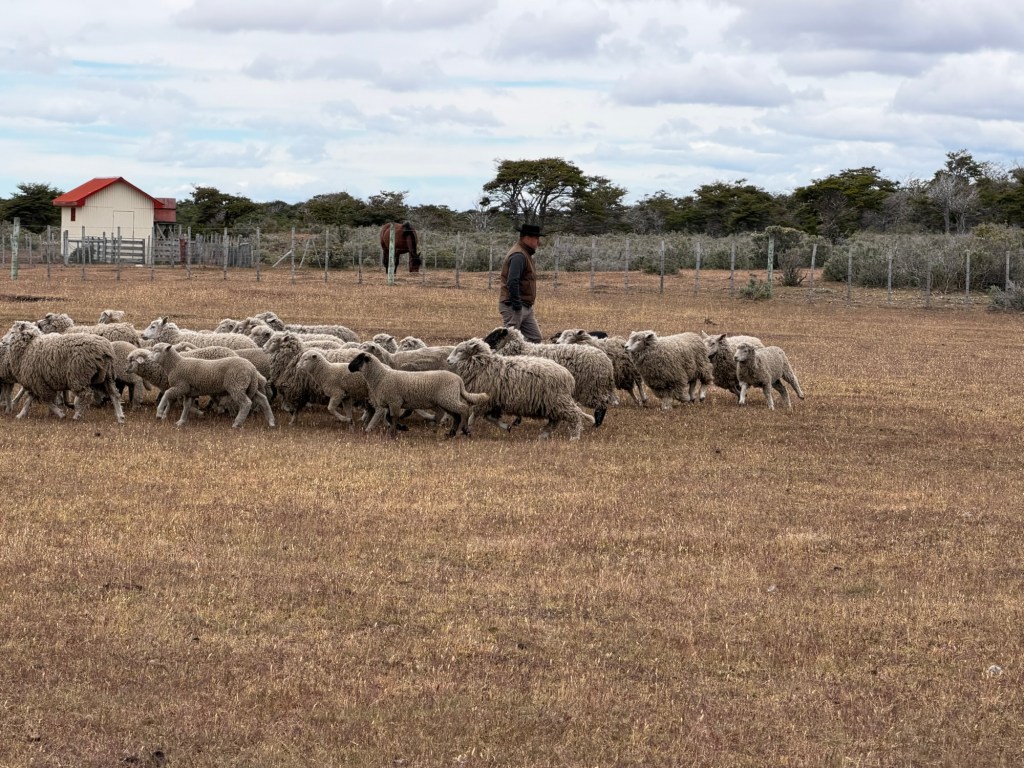
He demonstrated the various commands for the dog which come in the form of whistling in various tones.
And we also paid a visit to the sheep shearing shed!
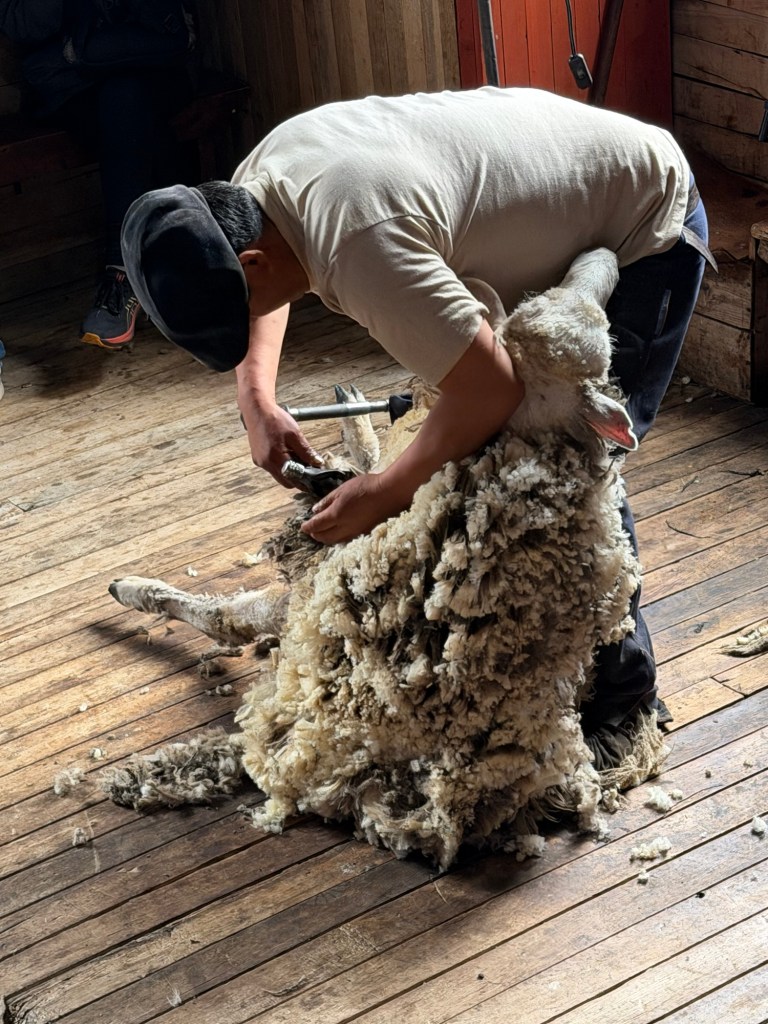
The sheep was rather docile in the upside down position – much like our greyhound at home when you pick her up.

And then clean shaven.
Unlike sheep in much of the world they only shear sheep here once a year aside from some hygiene trimming later on. The purpose being there really is not a very long-lived warm season.
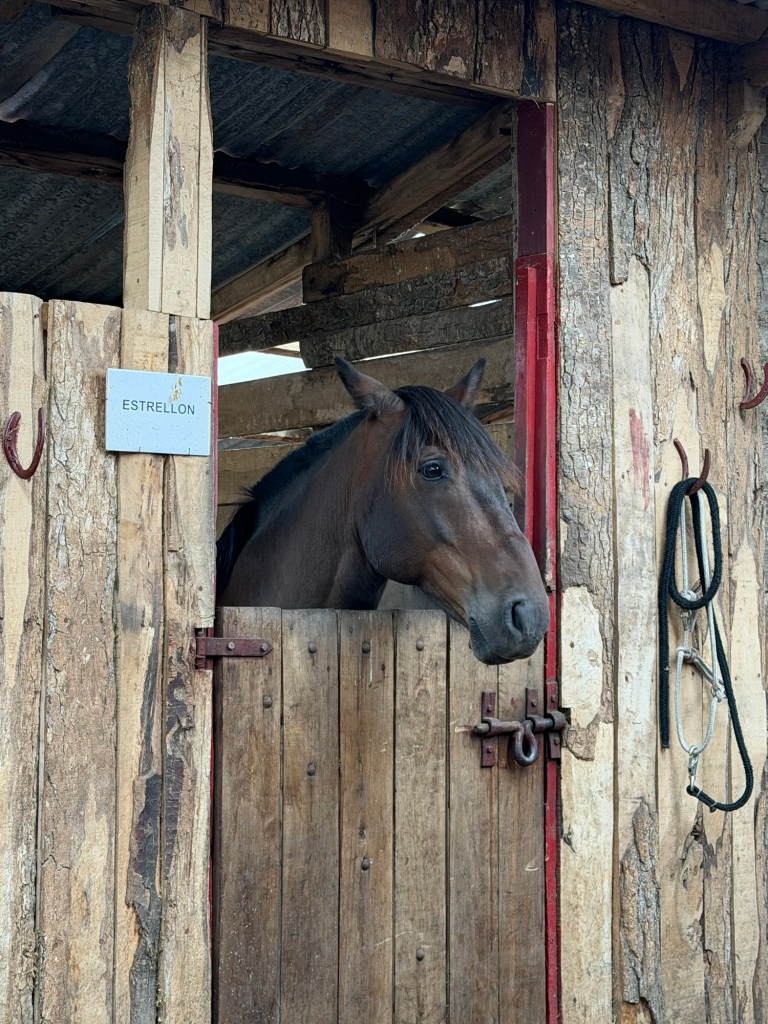
As I said earlier, horses here exist for ranching as well as rodeo. It’s one of the ways the ranch earns money. The family participates and performs well in rodeo. And they have a stallion who I think earns decent stud fees (I believe that’s what I heard).
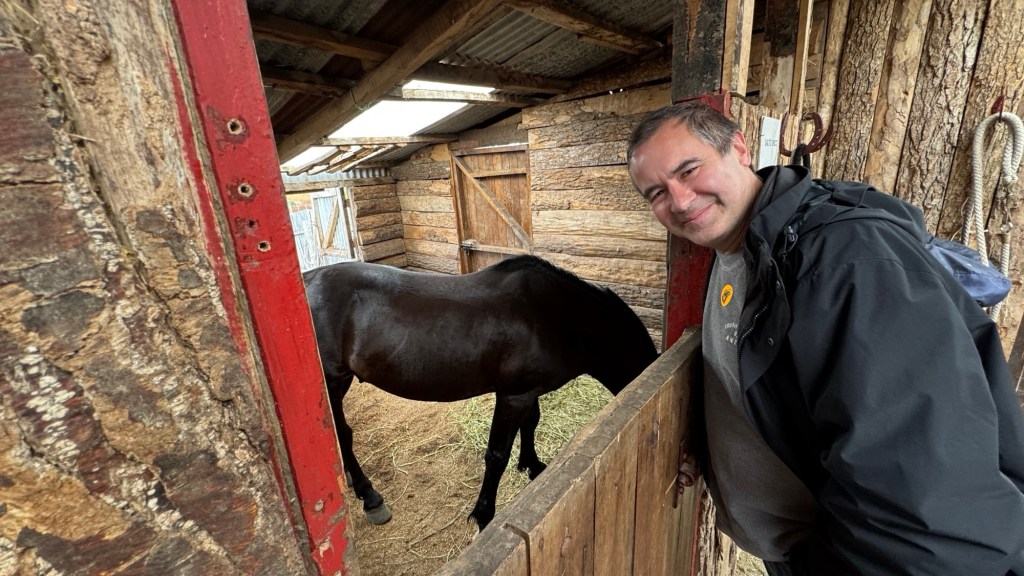
We think the stallion’s name was Salto Chico. Anyway, he ignored me, and then they took him out into the aisle where he hung around with our audience of forty.
After tromping around the Estancia for a few hours we were certainly ready to sleep on the bus ride back to the port. Nine hours on a tour, in my opinion, is a bit much. By that point I want to wander off on my own to decompress.
By the time we returned to Punta Arenas it was raining. We took a stroll to the local UniMarc for supplies unavailable on the ship and successfully navigated the self-checkout independently, much to the dismay of the cashier who wanted to be helpful, and we were back on board about 35 minutes between all aboard time.
I didn’t necessarily come to South America to learn about farming and old machinery, but my dad would have loved it. And the barbecue was great. It was good to get back on board the ship though, and after a steady diet of Chilean cuisine and cruise ship banquet food it was nice to have things broken up by Holland America’s Morimoto pop-up.
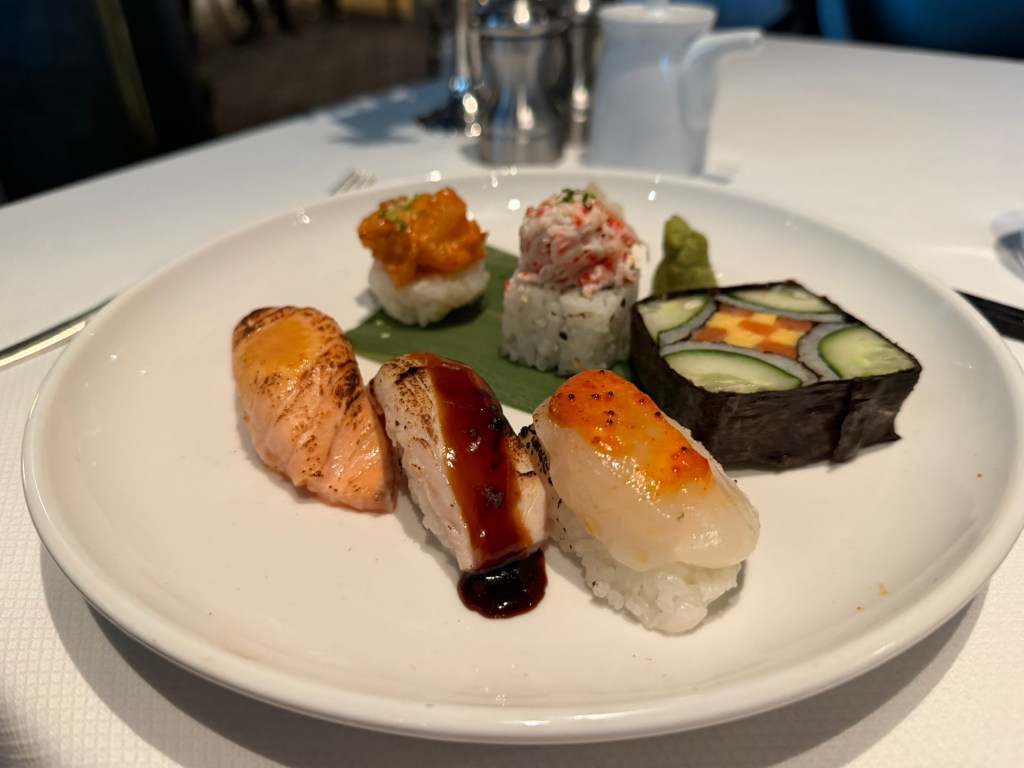
The Boss had a sushi appetizer and I had pork dumplings. I also had Kamikaze Seared Yellow-fin Ahi.
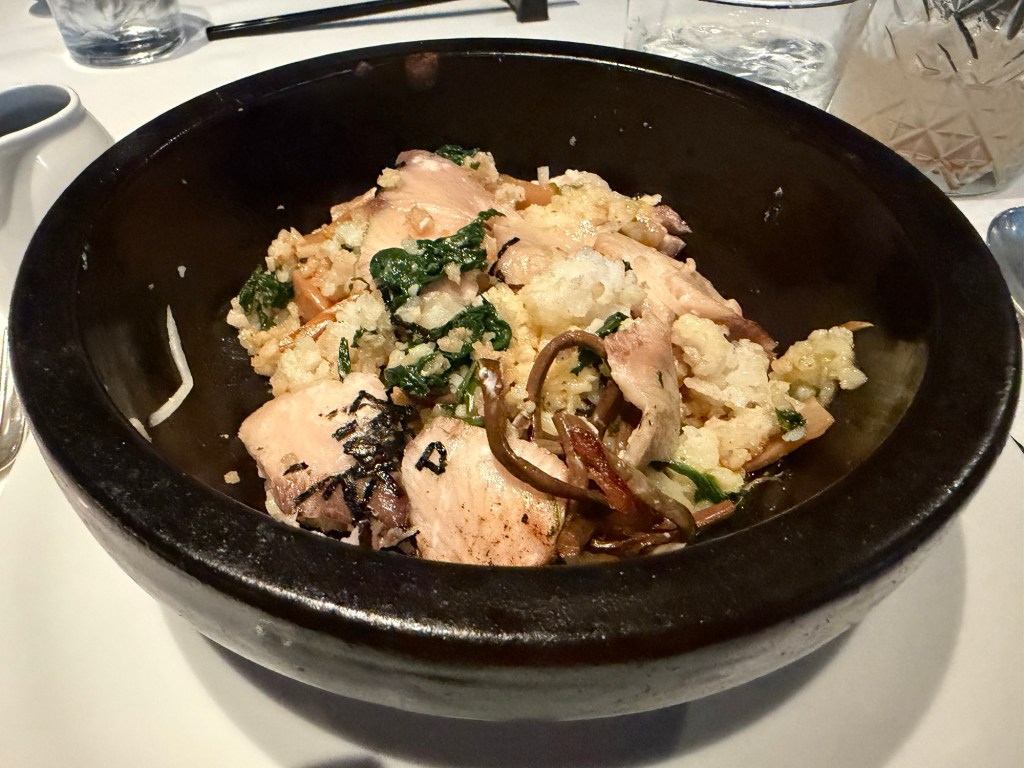
As you can see above this consisted of slices of ahi tuna seared against the side of a cast iron bowl and then mixed with rice as well as the tender greens of bok choi.
We had one more port day before heading across the Drake Passage. I’ll do my best to write that up tomorrow – it was Ushuaia which seems to be Aspen, Colorado, or Queenstown, New Zealand, but on the water.
 In Retrospect